OpenAI rolls out ads on ChatGPT's free tier in the US
OpenAI has started testing sponsored content on ChatGPT for free and Go plan users in the US, joining Perplexity and Google in the AI advertising race.

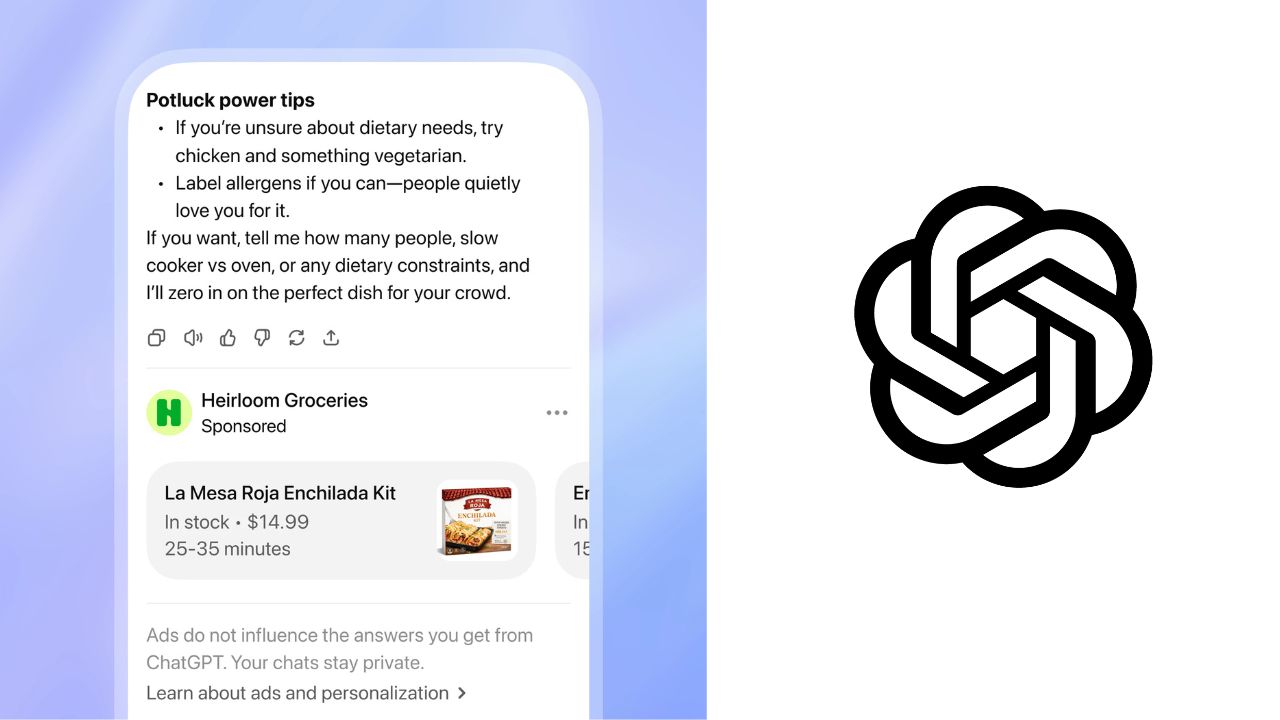
OpenAI has quietly started showing ads to ChatGPT users in the United States — but only those on the free and ‘Go’ tiers, the company announced in a blog post. Paying subscribers on the Plus, Pro, Team, and Enterprise plans will not see any sponsored content, at least for now.
How the ads work
The ads show up at the bottom of ChatGPT’s responses and are labelled as sponsored. So if you ask the chatbot for dinner ideas, you might get a neatly placed ad for a meal kit brand sitting right below the recipe. It is contextual, not random — OpenAI says the system picks ads based on conversation topics, not personal data shared with advertisers.
A shift in OpenAI’s positioning
For a company that has burned through billions in compute costs and only recently started turning modest revenue through subscriptions, the move makes commercial sense. But it also puts OpenAI squarely in a lane it had been careful to avoid. Sam Altman’s outfit has, until now, positioned itself as a research-first organisation. Ads change that narrative, even if they are labelled and opt-out-able.
Where it fits in the AI advertising race
OpenAI is not the first to make this bet, either. Perplexity has been running sponsored results in its AI search product for months. Google has folded ads into its AI Overviews. Microsoft has experimented with ad placements in Copilot. The playbook is familiar: build a massive free user base, then monetise attention. What is different here is the format — these are not search ads triggered by keywords, but contextual placements inside a conversational interface. That distinction matters for advertisers trying to figure out where AI fits in their media plans.
Privacy controls and guardrails
On the privacy front, OpenAI insists that user conversations are not handed over to advertisers. Brands get aggregated performance data — impressions and clicks — but nothing personally identifiable. Users can turn off ad personalisation or clear their ad-related data from settings. Free users also have the option to reduce ads in exchange for fewer daily messages, which is an unusual trade-off that signals OpenAI is still figuring out the right balance.
There are guardrails, too. Ads will not appear alongside responses on sensitive topics like health, mental health or politics. Users under 18 — or those predicted to be minors — are excluded entirely.
What it means for the ad industry
Whether this remains a quiet test or becomes a full-blown revenue engine depends on how users and advertisers respond. But for the ad industry, the signal is clear: conversational AI is now officially ad-supported territory.
Tags
Related Stories
Google Performance Max is taking over. Advertisers are not happy about it
Performance Max puts Google's AI in charge of your entire ad budget across every Google channel at once. Here is what that actually means for brands — and how to stay in control.
Read More
TikTok got banned in the US. Here is where the ad money went
When TikTok went dark in January 2026, brands had to move fast. The winners were obvious. The costs were not.
Read More
Influencer marketing is growing fast. Nobody knows if it actually works
Brands are pouring billions into influencer deals. 57% of marketers still cannot measure the ROI. That is a very expensive guess.
Read More
Leave a comment