What replaced third-party cookies in 2026? The honest guide for marketers
Third-party cookies are effectively dead across most browsers in 2026. Here is what is actually working as a replacement — and what is still not solved.

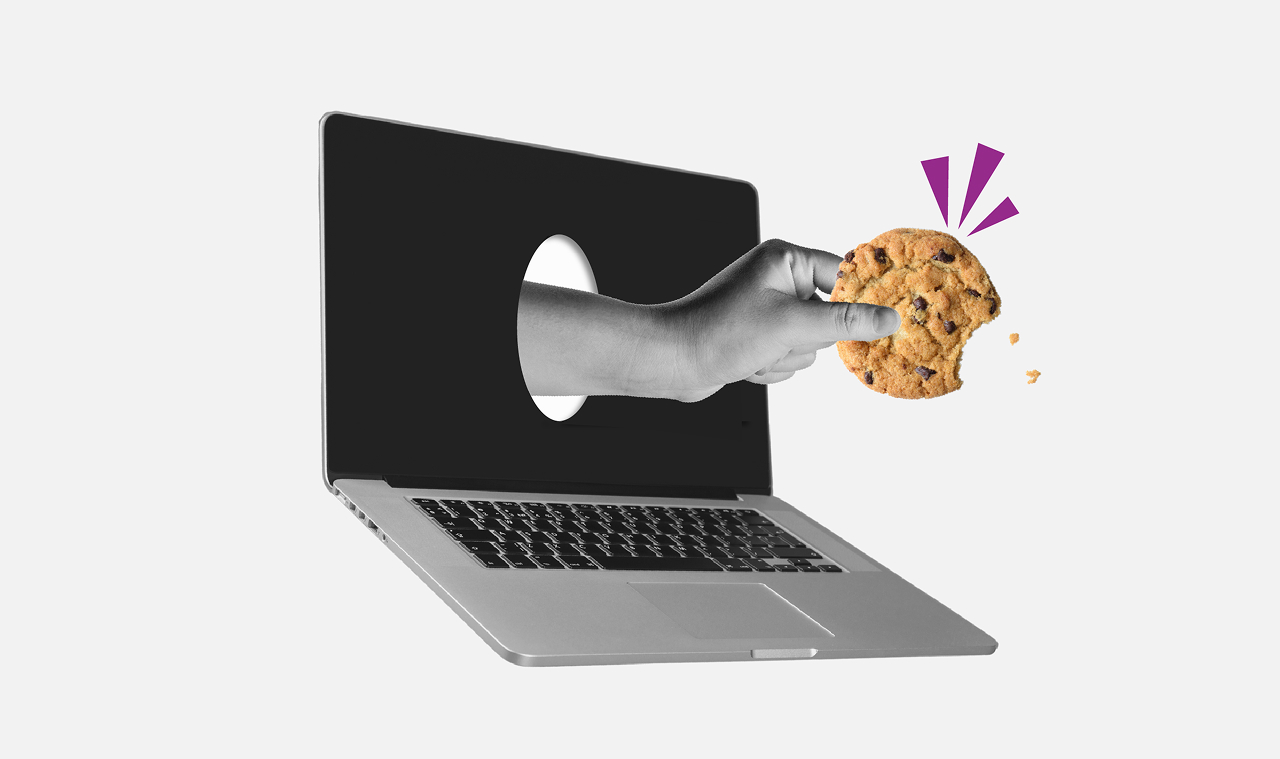
For about a decade, digital advertising ran on a simple piece of infrastructure that most people never thought about. A tiny file, stored inside your browser, that quietly tracked which websites you had visited. Advertising platforms read those files to understand your interests, build profiles about you, and follow you around the internet with ads for things you had recently looked at. This system had a name — third-party cookies — and for a long time, it was the invisible foundation holding most of digital advertising together.
In 2020, Google announced it would remove third-party cookies from Chrome by 2022. Then by 2023. Then 2024. Then 2025. Then it decided not to formally remove them at all, offering users a “choice” framework instead.
None of this matters anymore. The cookie is effectively dead, even if it is not technically deleted.
Safari blocked third-party cookies by default in 2017. Firefox followed. Together, Apple and Mozilla cover over 30% of global browser market share. In Chrome, a growing number of users actively block tracking or have accepted privacy settings that limit it. Meanwhile, privacy regulations from GDPR in Europe to various state laws in the US have made it legally risky to rely on cross-site tracking without explicit consent. The cookie still technically exists in Chrome. But the reliable cross-site audience data it once provided — the ability to know that the same person who visited your product page on Monday is now reading a news article on Thursday — is gone for a significant and growing portion of your audience.
The advertising industry spent four years in a state of anxiety about what would replace it. Here is what actually did.
First-party data became the main event
The clearest winner from the post-cookie world is first-party data — information that brands collect directly from their own customers, with explicit permission.
This includes email addresses from newsletter subscribers, purchase histories from your e-commerce platform, loyalty programme data, survey responses, and anything else a customer actively gives you. This data is yours. It does not depend on a third party’s tracking infrastructure. It cannot be taken away by a browser update.
The brands that are navigating the post-cookie world best are the ones that spent the past four years building the infrastructure to collect, store, and use first-party data properly. This means having a clear privacy consent mechanism on your website, a CRM system that can ingest and organise the data, and the technical capability to activate that data in advertising platforms through tools like Meta’s Conversions API or Google’s Enhanced Conversions.
These tools — Conversions APIs — are server-side solutions that let brands send data directly from their own servers to the advertising platform, bypassing the browser entirely. Where a cookie-based system would track a click from an ad and a subsequent purchase on your website, a Conversions API integration sends that purchase event directly from your server to Meta or Google, maintaining the conversion signal even when browser-based tracking is blocked. Setting this up is not trivial — it requires engineering work — but it is now essentially a baseline requirement for any serious digital advertiser.
We covered the broader picture of first-party data strategy in detail in our piece on first-party data strategies for 2026. The short version: if you have not built a first-party data foundation yet, that is the single highest-priority action in post-cookie digital marketing.
Contextual targeting had a quiet comeback
The second major development is the return of contextual targeting — and it is more sophisticated than the version that existed before cookies made it obsolete.
Traditional contextual targeting was simple: an ad for running shoes appears on a webpage about running. You targeted the content, not the person. It worked reasonably well, but it was blunt. A page about running could be a beginner’s guide, a product review, a race report, or a training programme — very different contexts for very different audiences, all grouped under the same keyword category.
Modern contextual targeting uses AI and natural language processing to understand what a page is actually about, not just what keywords it contains. It can distinguish between a page that is generally about fitness and a page specifically aimed at people preparing for their first half marathon. It can detect the emotional tone — is this page aspirational, practical, informational? — and match ad creative accordingly. It can assess whether the content environment is brand-safe without a human having to review every page.
For brands that were doing sophisticated audience-based targeting, contextual is not a perfect replacement. You lose the ability to follow a specific person from page to page based on their past behaviour. But what you gain is alignment between your ad and the environment in which it appears — which has its own performance benefits. Research consistently shows that ads placed in highly relevant content contexts produce better brand recall and more positive associations than ads that follow people around regardless of what they are currently reading.
What is still not solved
Two things that the industry said would replace cookies have not worked as well as promised.
Privacy Sandbox — Google’s initiative to enable interest-based advertising without individual tracking, through a system where your browser groups you into broad interest “topics” — launched but has not achieved meaningful scale. Most advertisers and ad tech vendors have been slow to build against it, partly because Google’s own uncertainty about the timeline made it hard to commit engineering resources, and partly because the targeting signals it produces are significantly less granular than what cookies provided.
Universal IDs — hashed email-based identifiers that could theoretically replace the cookie as a cross-site tracking mechanism — have gained adoption among publishers and ad tech platforms, but only work when users are logged in somewhere. For logged-in authenticated environments (reading a newsletter, using a shopping platform, browsing a media site where you have an account), they work reasonably well. For the anonymous browsing that makes up a large share of open web traffic, they provide no coverage at all.
The honest state of the industry in 2026 is that there is no single replacement for the cookie. There is a collection of partial solutions — first-party data, Conversions APIs, contextual targeting, universal IDs, and statistical modelling methods like Marketing Mix Modelling — each of which covers part of what cookies did, and none of which individually replicates the full picture.
What brands should actually be doing right now
The practical answer is to stop looking for one thing that replaces everything and instead build a measurement infrastructure that works with several imperfect inputs simultaneously.
First-party data activation through Conversions API is the foundation. Get this working if you have not already — it directly improves the signal quality for your Meta and Google campaigns and is the most straightforward high-impact thing you can do.
Contextual targeting deserves a genuine share of your media budget, not just a token experiment. Test it properly against your audience-based campaigns with matched budgets and a long enough window to generate statistically meaningful results.
Marketing Mix Modelling — a statistical approach that analyses the relationship between your ad spend and your sales outcomes across channels, without requiring individual-level tracking — is worth investing in if your total media budget is above roughly $2 million a year. Below that threshold, the volume of data is usually insufficient to produce reliable models.
The friction you need to prepare for: Your reported conversion numbers will look worse in a post-cookie world than they did before, even if your actual sales performance is unchanged. This is because some conversions that cookies previously tracked are now invisible to the platform. Your Google Ads dashboard will show fewer conversions. Your Meta attribution will look less impressive. But this does not mean the advertising is less effective — it means the measurement is less complete. Do not make budget decisions based on the apparent drop in attributed conversions without first understanding how much of that drop is measurement loss versus actual performance decline.
The cookie era is over, whether the cookie still technically exists in Chrome or not. The brands that adapt to that reality — building their own data, improving their measurement, and diversifying their targeting strategies — are the ones that will have a durable advantage in the years ahead.
Tags
Related Stories

AI shopping agents convert 60% better. Most brands are invisible
AI referral traffic converts 60% better than everything else. The number is real and misleading at the same time. Here is what to fix, and what to ignore.
Read More
TV ad cap removed in India: advertisers gained more than broadcasters
India scrapped the 12-minute TV ad cap in a year when ad volumes fell 7% and BARC ratings are suspended. That combination hands leverage to media buyers.
Read More
Last-click attribution is lying to you. Here is what to use instead
Most brands are still crediting the last ad their customer clicked for every sale. That model ignores almost everything that actually drove the purchase. Here is the honest picture.
Read More
Leave a comment