AI agents are coming for marketing jobs: Who survives in 2026
37% of companies plan to replace jobs with AI by end of 2026. Which marketing roles are safe and which are not? A data-backed survival guide.

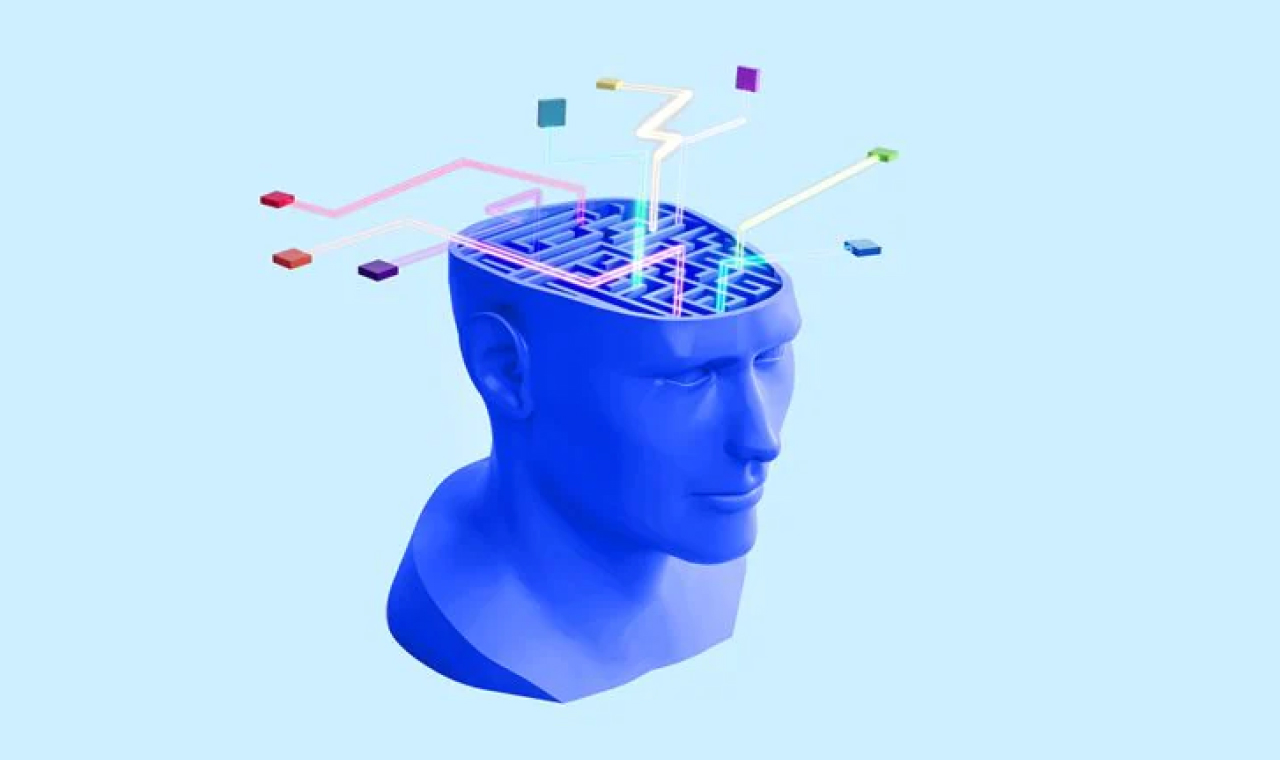
The conversation in marketing boardrooms has shifted from “How do we use AI?” to “How many people can AI replace?” According to a Spencer Stuart survey published by Forbes, more than one-third of Chief Marketing Officers now plan to reduce marketing headcount within the next two years, with 2026 expected to bring the most substantial cuts.
This is not a distant hypothetical. Resume.org projects that nearly 37% of companies expect to have replaced human jobs with AI by the end of this year. Gartner forecasts that 80% of marketing teams will have integrated AI agents for campaign optimisation, content workflows, and customer insights by the same deadline.
The question for every marketer reading this is no longer whether AI agents will reshape the industry. It is whether they will reshape you out of it.
The scale of automation already underway
McKinsey’s Global AI Report anticipates that AI automation will handle 30% to 45% of routine marketing tasks by the end of 2026. These are not experimental pilots; they are live deployments across global organisations.
The tasks being automated at the fastest rate include:
- Performance reporting and analytics dashboards — AI agents now generate, interpret, and distribute campaign reports without human intervention.
- Ad bidding and budget allocation — Platforms like Google’s Performance Max and Meta’s Advantage+ already use autonomous agents to optimise spend in real time across AI-powered ad surfaces.
- Basic content creation — First drafts of social media posts, email subject lines, product descriptions, and ad copy are increasingly produced by generative AI.
- Social media scheduling and monitoring — AI agents handle posting calendars, sentiment analysis, and community response triage.
- Keyword research and SEO auditing — Tools powered by large language models deliver instant competitive analysis that previously required hours of manual work. The broader shift towards Answer Engine Optimisation (AEO) is accelerating this trend.
The pattern is clear: any task that is repeatable, data-driven, and does not require original strategic thinking is being absorbed by AI agents at speed.
Which marketing roles are most vulnerable
Not all marketing roles face equal risk. The Spencer Stuart survey, which polled CMOs across Fortune 500 companies, identified specific functions where headcount reduction is most likely.
| Role Category | Risk Level | Why |
|---|---|---|
| Copywriters (performance/SEO) | Very High | Generative AI produces competent first-draft copy at scale. |
| Content production coordinators | Very High | Workflow automation tools handle scheduling, formatting, and distribution. |
| Junior media buyers | High | Autonomous bidding agents outperform manual optimisation on most platforms. |
| Email marketing specialists | High | AI agents now handle segmentation, personalisation, A/B testing, and send-time optimisation end-to-end. |
| Social media managers (posting/scheduling) | High | Automated scheduling and AI-generated captions reduce the need for dedicated headcount. |
| Data entry and reporting analysts | Very High | Dashboards powered by AI agents auto-generate insights from raw data. |
| Brand strategists | Low | Original positioning, cultural insight, and long-term vision remain deeply human skills. |
| Creative directors | Low | Conceptual thinking, aesthetic judgment, and campaign vision cannot be reliably automated. |
| CMOs and VP-level leaders | Very Low | Strategic decision-making, stakeholder management, and cross-functional leadership require human nuance. |
| AI/Marketing ops specialists | Very Low (Growing) | Demand for professionals who can manage, train, and audit AI systems is surging. |
Larger companies are moving faster. The Spencer Stuart data shows that organisations with over $20 billion in annual revenue have a 47% propensity for marketing headcount reduction, compared with 26% for smaller firms. The pressure, in most cases, comes directly from C-suite mandates to demonstrate cost savings from AI investments.
The roles that are growing
The disruption is not purely destructive. While routine roles contract, a new class of marketing positions is emerging.
AI Marketing Analyst — Professionals who can interpret AI outputs, identify when models are hallucinating or underperforming, and translate machine recommendations into human strategy. This role bridges the gap between raw AI capability and business judgment.
Prompt Engineers and AI Content Strategists — As generative AI becomes the default content production tool, the skill of crafting precise, brand-aligned prompts has become a specialised discipline. The difference between mediocre AI output and excellent AI output is almost entirely determined by the quality of the prompt and the editorial oversight applied.
Marketing Operations and AI Governance — Every AI agent deployed in a marketing stack needs monitoring, auditing, and alignment with brand guidelines and regulatory requirements. This function barely existed two years ago. In 2026, it is one of the fastest-growing roles in the industry.
The World Economic Forum’s Future of Jobs report reinforces this trajectory, suggesting that roles emphasising emotional intelligence, originality, and cross-cultural awareness will expand even as technical execution roles contract.
The “AI washing” problem
A critical nuance that mainstream coverage frequently misses: not every layoff attributed to AI is actually caused by AI.
Forbes reports a growing phenomenon of “AI washing,” where companies publicly attribute workforce reductions to artificial intelligence when the primary drivers are economic pressure, post-pandemic overhiring corrections, or simple cost-cutting. A Gartner survey found that only 20% of customer service leaders who reduced staff did so specifically because of AI capabilities.
This matters because it distorts the public narrative. Marketers who panic and assume every role is about to disappear may make career decisions based on inflated fears rather than actual market data. The reality is more nuanced: AI is eliminating specific tasks within roles far more rapidly than it is eliminating entire positions.
Gartner goes further, forecasting that half of companies citing AI as the reason for job cuts will rehire for similar roles by 2027, once they realise that fully autonomous AI systems still require significant human oversight to function effectively.
What marketers should do right now
For individual marketers navigating this transition, the survival strategy is straightforward but demands immediate action.
- Become the person who manages the AI, not the person the AI replaces. Learn to operate, audit, and optimise the AI tools your organisation is deploying. Platforms like Google’s AI Mode and ChatGPT’s advertising ecosystem are creating entirely new skill requirements, as we explored in our comparison of Google AI Mode ads versus ChatGPT ads.
- Invest in strategic thinking, not execution speed. AI will always be faster at executing repeatable tasks. Your value lies in asking the right questions, identifying cultural moments, and making judgment calls that algorithms cannot.
- Understand the new search landscape. The shift to Answer Engine Optimisation (AEO) is rendering traditional SEO execution skills less valuable while dramatically increasing demand for professionals who understand how to structure content for AI citation.
- Build a personal brand. In an era of AI-generated content sameness, authentic human voices become more valuable, not less. Marketers with recognised expertise and audience trust will be the last to be replaced and the first to be hired.
People Also Ask (FAQ)
Will AI replace marketing jobs in 2026? AI is not replacing all marketing jobs, but it is fundamentally restructuring them. Resume.org projects that 37% of companies will have replaced some jobs with AI by end of 2026. Routine execution roles (copywriting, reporting, media buying) face the highest risk, while strategic, creative, and AI governance roles are growing.
Which marketing roles are safe from AI? Brand strategists, creative directors, CMOs, and AI/marketing operations specialists face the lowest displacement risk. These roles require original thinking, cultural judgment, stakeholder management, and the ability to oversee and audit AI systems — skills that current AI agents cannot reliably replicate.
What skills should marketers learn to survive AI? Marketers should prioritise AI literacy (understanding how to operate and audit AI tools), data analytics, strategic thinking, and prompt engineering. The World Economic Forum emphasises that emotional intelligence and originality are the most durable competitive advantages against automation.
Are companies really laying off marketers because of AI? Not always. Forbes reports a growing trend of “AI washing,” where companies attribute layoffs to AI for public relations purposes when the real causes are economic pressures or overhiring corrections. Gartner found that only 20% of service leaders who reduced staff did so specifically because of AI.
Tags
Related Stories

AI shopping agents convert 60% better. Most brands are invisible
AI referral traffic converts 60% better than everything else. The number is real and misleading at the same time. Here is what to fix, and what to ignore.
Read More
TV ad cap removed in India: advertisers gained more than broadcasters
India scrapped the 12-minute TV ad cap in a year when ad volumes fell 7% and BARC ratings are suspended. That combination hands leverage to media buyers.
Read More
Last-click attribution is lying to you. Here is what to use instead
Most brands are still crediting the last ad their customer clicked for every sale. That model ignores almost everything that actually drove the purchase. Here is the honest picture.
Read More
Leave a comment