AI Overviews are destroying click-through rates: Damage report
Google AI Overviews cut organic CTR by 61% and paid CTR by 68%. Indian publishers lost 25% of search referrals. The data, the impact, and what to do about it.

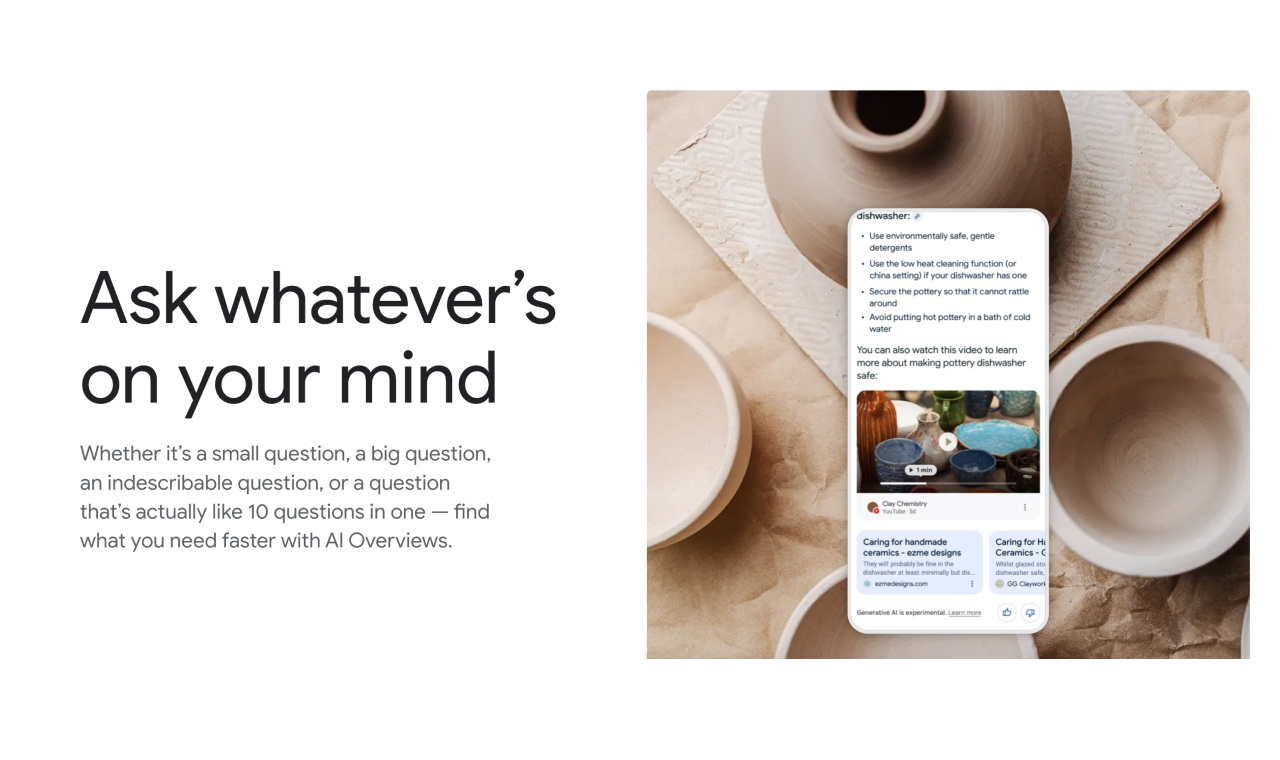
I have been tracking Google’s AI Overviews since the feature expanded globally last year, and every time I check the data, it gets worse. Not a little worse. Dramatically, measurably, structurally worse — for publishers, for advertisers, and especially for Indian digital media businesses that built their entire revenue model around organic search traffic.
The numbers are now in. And they are brutal.
The damage in numbers
Let me lay out the evidence plainly, because the scale of this shift deserves to be stated without softening.
Organic click-through rates have collapsed. Seer Interactive’s analysis found a 61% drop in organic CTR for informational queries that feature AI Overviews. That is not a rounding error. That is more than half of all clicks vanishing — not because users stopped searching, but because Google started answering their questions before they could click on anything.
Paid advertising is getting hammered too. The same analysis showed paid CTR dropping by 68% on queries with AI Overviews. Advertisers are paying for visibility on a page where Google’s own AI summary has already satisfied the user’s intent. The ad is still there. The user just does not need it anymore.
Position one is worth less than ever. According to Trydecoding’s year-over-year analysis, position one organic CTR has dropped 32% compared to a year ago. The slot that every SEO professional in the world has spent their career chasing is losing value at an unprecedented rate.
AI Overviews are everywhere. They now appear in approximately 55% of all Google searches and triggered on 88% of informational queries. Google’s own data shows a 58% year-over-year increase in AI Overview appearances between February 2025 and February 2026. This is not a test. It is the new default.
The zero-click search is now the norm. According to research cited by exchange4media, zero-click searches rose from 56% in May 2024 to 69% by May 2025 — and the trend has only accelerated through 2026. Nearly seven out of every ten Google searches now end without the user visiting any external website at all.
And the most telling statistic of all: DMG Media, the publisher of MailOnline and Metro, reported CTR drops of up to 89% when AI Overviews appeared for their content. That is not an outlier — that is the extreme end of a spectrum where the average loss is already devastating.
Why this hits Indian publishers hardest
I wrote earlier about the shift from SEO to Answer Engine Optimisation as a strategic response to zero-click search. That article covered the “what to do about it” question. This one covers the damage being done while most Indian publishers are still figuring out that something has changed.
According to exchange4media’s reporting, Indian news websites experienced a 25% drop in Google referrals between May 2024 and May 2025. For publishers whose revenue model is almost entirely dependent on advertising — and whose advertising revenue is almost entirely dependent on page views — a 25% traffic decline translates directly to a 25% revenue hit.
And the problem is structural, not temporary.
India’s digital publishing industry is uniquely vulnerable for three reasons:
First, the revenue model is fragile. Most Indian digital publishers operate on extremely thin margins, with advertising accounting for 85% to 95% of total revenue. Unlike the New York Times or the Financial Times, they have not built significant subscription or membership revenue. When traffic drops, there is no second revenue stream to cushion the fall.
Second, the ecosystem is fragmented. India has thousands of digital publishers, many of them small operations producing content in regional languages. BestMediaInfo has documented how this fragmentation makes collective action nearly impossible — no single publisher has enough market power to negotiate with Google, and no industry body has managed to coordinate a unified response.
Third, awareness is dangerously low. While US and European publishers have been actively restructuring their content strategies around AI Overviews for over a year, most Indian publishers have not. The AEO strategy shift we covered requires structured data implementation, entity-first content architecture, and fundamental changes to editorial workflows. These require investment, expertise, and urgency. Most Indian newsrooms have none of the three.
The advertiser problem: Paying more, getting less
This is not just a publisher story. Advertisers are caught in a worsening trap.
Consider what is happening mechanically. Google’s AI Overviews occupy the most prominent real estate on the search results page — often the entire visible screen on mobile devices. Organic results are pushed down. Paid ads, which Google is now showing within approximately 40% of AI Overview results, compete for attention against a summary that has already given the user what they came for.
The result: advertisers are bidding in an auction where the value of every impression is declining. The black box automation trend we covered makes this worse — platforms like Google’s AI Max and Performance Max are automatically placing ads into these degraded environments while reporting the results through their own measurement systems.
There is a bitter irony here. Google’s own ad revenue from AI Overviews is projected to reach 3% of total search ad revenue in 2026 and 6-7% in 2027, according to AlixPartners. Google is building a new revenue stream by cannibalising the organic traffic that advertisers and publishers previously relied on — and then selling paid placements within the very feature that destroyed that organic traffic.
The advertiser who used to get free visibility through organic rankings now must pay for visibility in AI Overviews. The publisher who used to monetise that organic traffic through display advertising is losing both the traffic and the ad revenue simultaneously. Google is the only entity in this equation that benefits from both sides.
What Google says vs what the data shows
Google’s official position is that AI Overviews generate “higher quality” clicks — users who do click are more informed and have higher intent. That claim may even be true. A Pew Research Center study found that users clicked 8% of the time when AI summaries appeared, versus 15% without them. The clicks that survive are presumably more intentional.
But this argument obscures the core problem. If your click volume drops by 47% and the remaining clicks are “higher quality,” the arithmetic does not work for most publishers. A news website that loses nearly half its traffic cannot survive on the theory that the remaining visitors are better. The ads on those pages paid by impression, not by visitor quality.
Google is also reportedly reassessing its AI Overviews strategy due to backlash. Some reports suggest the company may make AI Overviews less aggressive in capturing traffic — reducing their length, triggering them on fewer queries, or offering publishers more prominent attribution. Whether this reassessment translates into meaningful changes or is merely a public relations exercise remains to be seen.
What publishers and advertisers should actually do
The existential nature of this shift demands a strategic response, not incremental adjustments. Here is the framework.
For publishers
Restructure content for AI citation, not just ranking. This means implementing comprehensive schema markup, structuring content with direct answer blocks, and building entity-first architectures. The detailed playbook is in our AEO strategy guide — it is no longer optional reading.
Diversify traffic sources aggressively. Google Discover is emerging as a significant traffic driver for breaking and topical content. Social platforms, email newsletters, and direct audience relationships must replace the assumption that Google organic search will deliver consistent traffic. Publishers who build a direct reader relationship — through newsletters, apps, or communities — own an asset that AI Overviews cannot cannibalise.
Explore revenue diversification beyond advertising. Indian publishers who rely on display advertising for 85%+ of revenue are operating with a single point of failure. Membership models, sponsored content, events, and data products are all viable alternatives that do not depend on Google sending traffic.
For advertisers
Reassess search campaign ROI with AI Overviews factored in. Do not rely on Google’s own reporting without independent verification. Track actual conversions and revenue attributed to paid search, and compare the trajectory against the CTR declines documented in this article. If your effective CPA is rising but Google’s dashboard says the campaign is performing well, believe the CPA.
Invest in channels that AI cannot cannibalise. First-party data strategies, email marketing, and direct customer relationships generate traffic and conversions that do not flow through Google. Connected TV, which we have covered as a rapidly growing ad channel, offers brand-building reach outside the search ecosystem entirely.
Demand transparency on AI Overview ad placements. If your ads are appearing within or alongside AI Overviews, you need to know the performance differential. Are those placements converting at the same rate as traditional search ads? If not, they should be priced differently — or excluded from automated campaigns.
What this really means
Google built the most powerful traffic distribution system in the history of the internet and then built a feature that makes it unnecessary to use. That is not a criticism — it is an observation about incentive structures. Google’s incentive is to keep users on Google. AI Overviews accomplish that perfectly. The fact that publishers lose traffic and advertisers lose click value is a side effect that Google has little commercial reason to fix.
The publishers and advertisers who survive this transition will be the ones who recognised early that Google Search was never a reliable long-term traffic strategy — it was always a channel controlled by a single company with its own commercial priorities. The AI Overviews CTR collapse is not a bug. For Google, it is an extraordinarily effective feature.
The only question is whether the rest of the industry adapts before the damage becomes permanent.
Tags
Related Stories
AI shopping agents convert 60% better. Most brands are invisible
AI referral traffic converts 60% better than everything else. The number is real and misleading at the same time. Here is what to fix, and what to ignore.
Read More
TV ad cap removed in India: advertisers gained more than broadcasters
India scrapped the 12-minute TV ad cap in a year when ad volumes fell 7% and BARC ratings are suspended. That combination hands leverage to media buyers.
Read More
Last-click attribution is lying to you. Here is what to use instead
Most brands are still crediting the last ad their customer clicked for every sale. That model ignores almost everything that actually drove the purchase. Here is the honest picture.
Read More
Leave a comment