Google Performance Max is taking over. Advertisers are not happy about it
Google Performance Max puts AI in charge of your entire budget across Search, Shopping, YouTube, and Display at once. Here is why advertisers are frustrated and what to do about it.

For most of digital advertising’s history, buying Google ads meant making specific choices. You chose which keywords to target. You chose which websites to show your display ads on. You chose whether to run on YouTube or Gmail or Google Shopping. You set your bids, wrote your copy, and watched the results. The system did what you told it to do.
That model is being systematically dismantled.
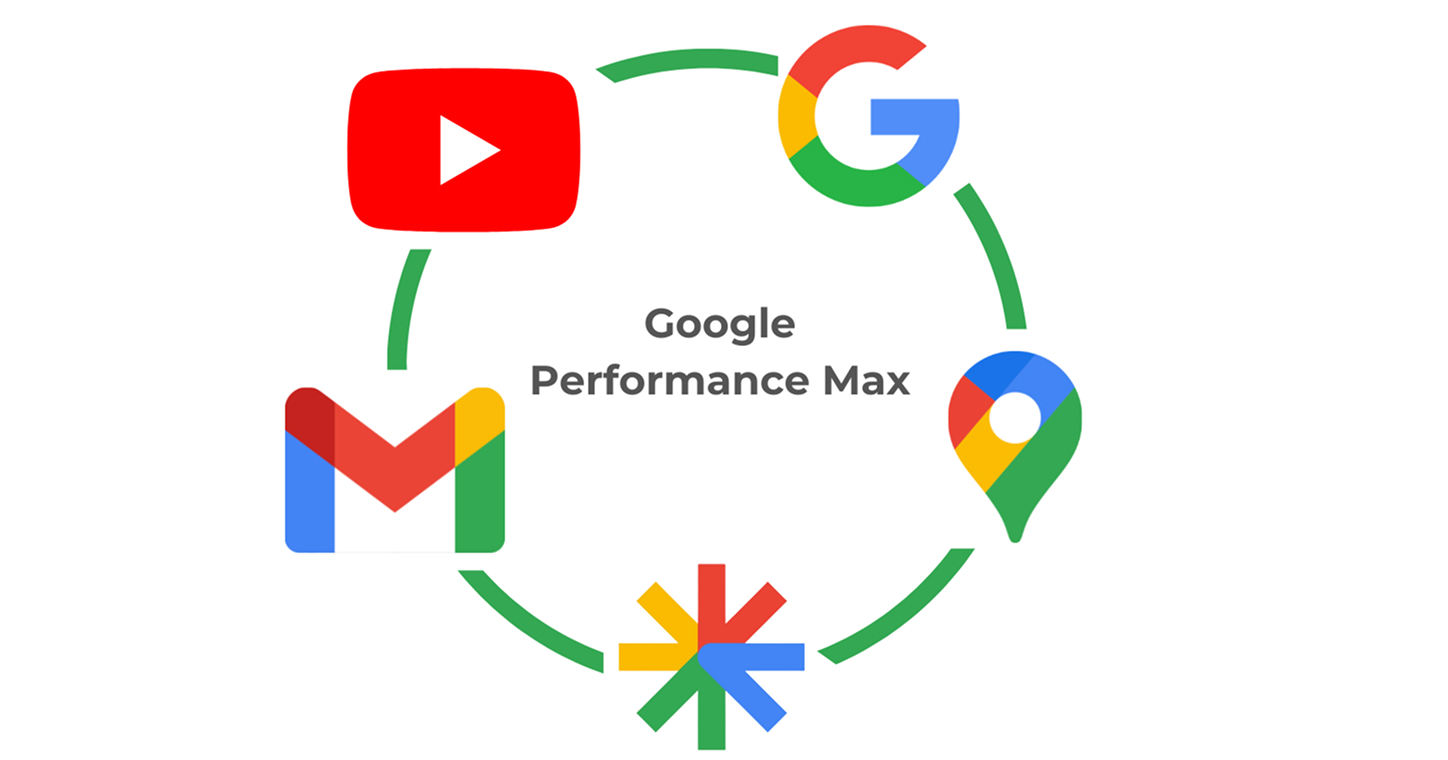
Google’s Performance Max — known in the industry as PMax — is a campaign type that combines every major Google advertising channel into a single campaign controlled almost entirely by the AI. Search, Shopping, Display, YouTube, Gmail, Google Maps, and Google Discover all feed from the same budget pool. The AI decides how to split that budget across all of them, which audiences to target, what creative to test, and where exactly each ad shows up. You set a goal — usually sales or leads — and the machine figures out everything else. Google has been quietly steering advertisers toward PMax for the past two years. Now it accounts for a significant share of conversions on the platform. For most brands that sell products online, it is no longer really optional.
The reaction from the advertising community has been, to put it charitably, mixed.
What PMax actually does with your money
The simplest way to understand Performance Max is to think of it as Google saying: give us your budget, tell us what outcome you want, and trust us to spend it correctly.
For Google, this is an elegant product. Every advertiser’s budget flows into a single system that Google’s AI optimises across all its properties simultaneously. The AI learns from every impression, click, and conversion to get better at spending your budget toward your stated goal. In theory, it finds opportunities across channels that a human media buyer would never think to look for — a specific YouTube audience segment that drives cheaper conversions than branded search, for example.
For advertisers, the arrangement comes with a significant catch. You largely lose the ability to see where your money is actually going in any detail. During most of PMax’s existence, advertisers could not see a proper breakdown of spend by channel. They could not tell whether their budget was mostly going to YouTube, or Display, or Search. They received a single blended performance number — and that was essentially it.
Google has added some transparency improvements in late 2025 and early 2026. Advertisers can now see a broader channel-level breakdown and add negative keywords to prevent certain search terms from triggering their ads. But the core critique among experienced practitioners has not changed: the system is still designed so that Google’s AI makes the fundamental decisions, and the advertiser is mostly just watching the dashboard.
The specific complaints that keep coming up
Talk to any performance marketer who has been managing PMax campaigns for more than six months and you will hear the same set of frustrations.
The first is the brand search problem. PMax has a strong tendency to spend budget on branded search terms — queries where someone has already searched your company’s name. Capturing branded search is valuable, but it is also the cheapest and easiest conversion in advertising. A person typing your brand name into Google was almost certainly going to find your website anyway. Crediting a PMax conversion for that person clicking an ad on a branded query inflates the campaign’s apparent performance dramatically. Brands that sell through Google Shopping found PMax routinely cannibalising customers who were already mid-purchase journey, making the ROAS figures look excellent while doing very little incremental work. Google added a brand exclusion tool, but it has to be explicitly applied — it is not on by default.
The second complaint is about the Display and Discover placements. When PMax does not have enough Search or Shopping inventory to spend a full budget, it fills the gap with Display and Discover ads — banner-style ads that appear on websites across Google’s network and in the Google app. These placements are cheap, and they process as ad impressions and sometimes even as conversions in the system. But Display and Discover traffic converts very differently from Search traffic. Mixing them together in a single performance number makes it genuinely difficult to understand what is driving your results.
This is familiar territory. As we covered in our analysis of how black box advertising reduces advertiser control, this is the structural tension at the heart of how both Google and Meta are building their ad products in 2026: more automation, less visibility, compelling performance dashboards that make it hard to ask hard questions.
Why Google is pushing PMax so aggressively
It is worth being direct about the incentive structure here.
Performance Max is good for Google’s revenue. When one AI system controls the allocation of budget across all Google channels simultaneously, Google’s system can optimise for total spend efficiency in ways that happen to keep more of the budget inside Google’s ecosystem. It is harder for an advertiser to identify that their Display spend is performing poorly and move that budget to a competitor’s platform, because in PMax there is no easy lever to pull for Display specifically.
This does not mean PMax is a bad product. For many advertisers — particularly smaller businesses with limited campaign management capacity — handing the decisions to Google’s AI genuinely does produce better results than managing five separate campaign types manually. The AI is extremely good at finding conversion pathways that humans miss. For brands that sell purely direct-to-consumer, with clear conversion tracking and a product that is not heavily dependent on brand safety, PMax often delivers on its promise.
The problem is that it has been positioned as the right answer for almost everyone, regardless of whether the specific advertiser’s situation actually suits it. And as we outlined in our look at how advertising agencies are adapting to AI in 2026, the agencies that perform best are the ones treating AI automation as a starting point to interrogate critically — not a finished answer to accept uncritically.
How to actually manage PMax without losing your mind
The more experienced practitioners are not avoiding PMax — they are running it alongside more controlled campaign types to maintain some visibility and leverage.
A hybrid approach works like this: run PMax for broad discovery and new customer acquisition, but keep separate Standard Shopping or Search campaigns running simultaneously for your most important products and keywords. The Standard campaigns give you hard data on what is working at a granular level. That data, in turn, tells you what signals to feed into PMax to improve its targeting.
A few specific settings are worth getting right before you launch any PMax campaign:
- Apply brand exclusions immediately. Do not let PMax spend on queries containing your brand name. The apparent ROAS from branded traffic will flatter the campaign while masking what is genuinely working.
- Upload a customer exclusion list. If you have a list of existing customers, exclude them. PMax tends to over-index on retargeting existing customers, which again inflates apparent performance.
- Build your asset groups tightly. PMax uses your uploaded images, headlines, and videos to generate ad creative. If you upload generic assets, the AI will generate generic ads. Specific, high-quality creative assets with clear product benefits give the AI significantly better material to work with.
The friction you need to prepare for: When you first launch a PMax campaign, expect the learning period — typically one to three weeks — to produce unstable, sometimes alarming results. The AI is running experiments across all channels simultaneously and has not yet found a stable configuration for your account. During this period, do not make major budget changes, do not pause the campaign, and do not compare the early numbers to your existing campaign benchmarks. The system will look like it is underperforming. It usually is, temporarily. Making changes during the learning window resets the clock and forces the AI to start the learning process again from scratch.
Performance Max is not going away. Google has made that clear. The question for every brand running Google advertising right now is not whether to engage with it — it is how to engage with it intelligently, rather than just letting the system do whatever it decides.
Tags
Related Stories
AI shopping agents convert 60% better. Most brands are invisible
AI referral traffic converts 60% better than everything else. The number is real and misleading at the same time. Here is what to fix, and what to ignore.
Read More
TV ad cap removed in India: advertisers gained more than broadcasters
India scrapped the 12-minute TV ad cap in a year when ad volumes fell 7% and BARC ratings are suspended. That combination hands leverage to media buyers.
Read More
Last-click attribution is lying to you. Here is what to use instead
Most brands are still crediting the last ad their customer clicked for every sale. That model ignores almost everything that actually drove the purchase. Here is the honest picture.
Read More
Leave a comment